Comic art traditions
Where the looks come from. How each tradition was created, the artists who made it, and the real works to see — the knowledge behind the styles you can render a game in.
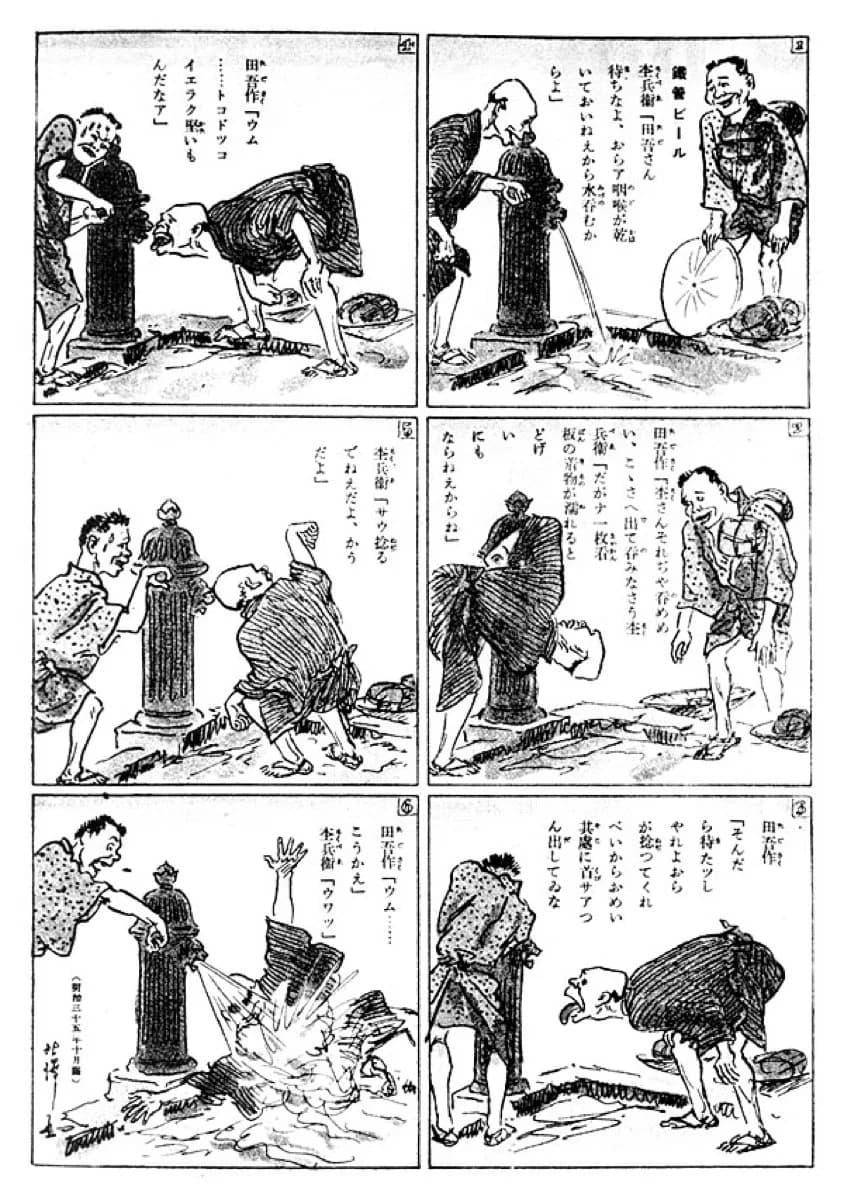
Manga: from Hokusai's sketchbooks to the weekly black-and-white page
How a word for random sketches became Japan's mass medium — via Meiji newspaper strips, children's magazines, Tezuka's cinematic page and the screentone studio.
Manga — Japanese story comics, printed in black and white · Word in print by the 1790s; newspaper strips from 1902; story manga from 1947
The Gotland picture stones: a comic carved in the 8th century
Several hundred painted limestone slabs from one Baltic island, divided into stacked bands and read top to bottom — sequential narrative art with no ancestor and no heirs.
Gotland picture stones and Viking-age interlace carving · 5th–11th century
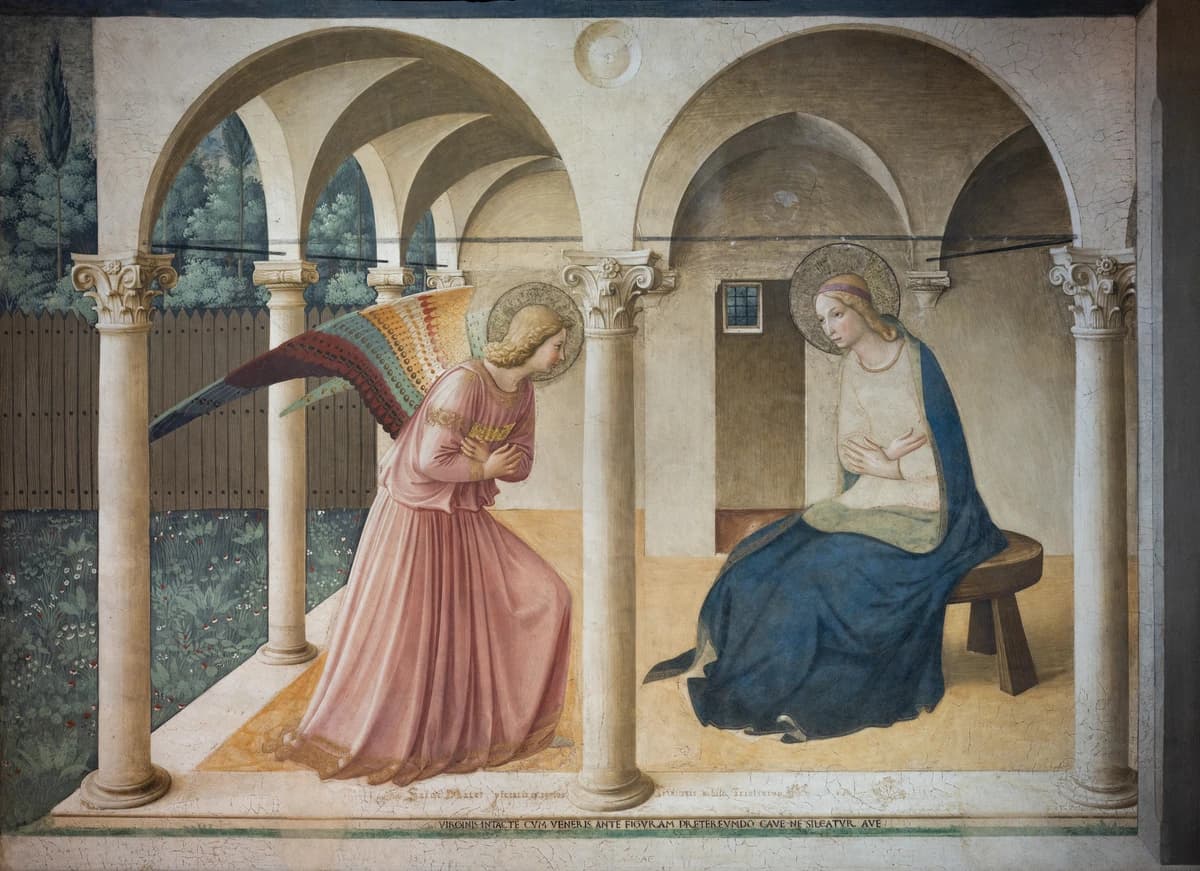
Buon fresco: how a story was painted into a wall
For two centuries the biggest pictures in Europe were painted into wet plaster, one day's patch at a time — and the rules that kept them legible across a room are not easel rules.
Buon fresco — monumental painting bound to the wall, from Giotto to Piero della Francesca · 1303–1466, revived from the 1870s

The Art Nouveau poster: flat colour and the whiplash line
How the colour stone lithograph of 1894–1905 put one curling line, flat inks and a pale halo on every wall in Paris and Brussels.
Art Nouveau colour poster lithography · 1894–1905

Raja Ravi Varma and the oleograph: the Indian epic in oil
How one painter put Puranic myth into European academic oil, and how a lithographic press in Bombay turned it into the picture of a god that a whole subcontinent recognises.
The academic-realist Indian mythological picture — oil painting and the varnished chromolithograph that reproduced it · 1880s–1930s; the press from 1894

Chinese woodblock printing: a short history of the illustrated leaf
The pear-wood plank was China's normal book technology for eight centuries before it was Japan's — and the late-Ming novel workshops turned it into a picture system of two hands.
Ming–Qing xylography — the illustrated book leaf and its colour-printed descendants · c. 1573–1750

Chitra katha: a short history of the Indian picture story
From souvenir paintings sold outside a Calcutta temple to the four-colour mythological album — how India built a flat picture system out of cheap paper and a black line.
Chitra katha — the Indian picture story, from the Kalighat pat to the mythological comic album · c. 1830–1990

Ink as weather: the atmospheric brush of China and Japan
Seven hundred years of painters who made mist, flood, wind and smoke out of nothing but diluted carbon and a wet brush.
Atmospheric ink painting — the wet tonal brush of China and Japan · 13th–19th century

Mughal painting: a short history of the imperial kitabkhana
Two Persian masters, a hundred Indian painters and a workshop that turned a book department into the most densely worked picture system in Asia.
Mughal court painting — the imperial kitabkhana folio, opaque body colour on burnished wasli paper · c. 1540s–1670

The brocade picture and the door god: popular colour printing in Japan and China
Warrior sheets bought on impulse for pocket money, and New Year prints pasted on a door and replaced every spring — the two great popular colour-print economies of East Asia.
Popular polychrome woodblock printing — musha-e warrior prints and nianhua New Year prints · c. 1810s–1920s

The illustrated martial novel: how China and Japan printed a fight
Water Margin's 108 outlaws became the most illustrated cast in East Asian art — cut into pearwood blocks, dealt as playing cards, and re-staged as Japanese warrior prints.
Martial-novel woodblock illustration and the warrior print (musha-e) · c. 1610–1883

The engraved book plate: how Doré's workshops printed the Victorian imagination
One black ink, a boxwood block, and a workshop of engravers cutting another man's drawing line by line — the process behind Doré's Inferno and the Victorian illustrated book.
Tonal wood engraving — the Victorian engraved book plate · c. 1820s–1890s; the Doré ateliers 1861–1876

Gothic illumination: gold leaf, vellum and the painted book
Egg tempera, burnished gold and a quill line drawn over the paint — how Paris workshops built the book of hours, c. 1270–1430.
Western European Gothic manuscript illumination · c. 1270 – c. 1430

Ink wash: the East Asian art of the loaded brush
Water, ink, absorbent paper and no way back — seven hundred years of painting where line and tone are the same stroke.
East Asian ink-wash painting — shuǐmò 水墨 / suiboku-ga 水墨画 (sumi-e) · 13th–18th century; still practised today

The flat-shape poster: WPA silkscreen and the road to the mid-century storybook
Four to six opaque inks, hand-cut stencils, and no shading anywhere — the Depression-era poster shops that got to the mid-century look first.
American flat-plane silkscreen poster design and its mid-century afterlife · 1907–1963; WPA silkscreen 1936–40

The bitonal woodcut: how the 1890s reinvented black and white
One black ink, one white sheet, and every light in the picture carved out by hand — the tradition Vallotton began in Paris in 1891.
Bitonal relief printing in the modern manner · 1890s–1920s

Pop art and the comic book: a painting of a print
How the cheapest pictures in America — four-colour newsprint comics — became five-foot canvases in the galleries of 1960s New York.
American Pop Art — the comics-appropriation branch · 1961–1968; sources 1938–1956

Ukiyo-e: a short history of the Japanese woodblock print
How Edo's cheap entertainment prints — cut by one hand, printed by another — became the most copied picture-making system in the world.
Nishiki-e — the Edo-period colour woodblock print · c. 1660s–1860s; full colour from 1765

Transparent watercolour: the art of the reserved light
The painter gives up white paint — and every bright thing in the picture becomes the paper the brush went around.
British transparent watercolour · 1750–1925
Every tradition here backs a comic style you can render a chess game in — each article links to its style, and to the method that connects them.
See the comic styles