♞Chess2Story
PlayersGamesPricingFeaturesLab
+ New Game
PlayersGamesPricingFeaturesLab
Est. 2026The Colophon

Chess, told as a story.

Every game becomes a comic book, a chivalric tale, or a grandmaster's review — three renderings of the same moves, handcrafted page by page.

◆

✦ Worlds

  • The War of the Three Kingdoms
  • Arcanum Academy
  • The Saga of King Arthur
  • The World of Cossack
  • The Great War of Kurukshetra
  • Malibu vs Venice: Two Coasts of LA
  • All worlds →

✦ Recent stories

  1. I.
    The Road from Vermilion Walls
    Wei, Yi vs Bruzon Batista, Lazaro
  2. II.
    The Road from Vermilion Walls
    Wei, Yi vs Bruzon Batista, Lazaro
  3. III.
    The Silence of Kawanakajima
    Short, Nigel vs Timman, Jan
  4. IV.
    The Wedge of Autumn
    Short, Nigel vs Timman, Jan
  5. V.
    Salt Fog at the Gate
    Capablanca, José Raúl vs Marshall, Frank
  6. VI.
    The Gate That Stayed Open
    Steinitz, Wilhelm vs Von Bardeleben, Curt
  7. Browse all →

✦ Find

  • Home
  • Pricing
  • The Collection
  • The catalogue
  • Players
  • Comics
  • The Lab
  • About
  • Contact

Fine print

  • Privacy
  • Terms
  • Cookies
Chess2Story
A narrative engine for chess
Handset in Fraunces · Printed from the cloud
© 2026 Chess2Story. All moves reserved.
Immortal Games · Famous games✓ VERIFIED SCORE

The Game of the Century

A thirteen-year-old leaves his queen to be taken — and wins her back with a windmill of checks. Bobby Fischer announces himself to the world.

Donald Byrne against Bobby Fischer  ·  Third Rosenwald Trophy · 1956.10.17.  ·  0-1

COMIC 7 worldsSTORY 5 tellingsMOMENTS 4 turnsSCORE verified PGN
Turn your own game into a comic →
What happened

The story behind it

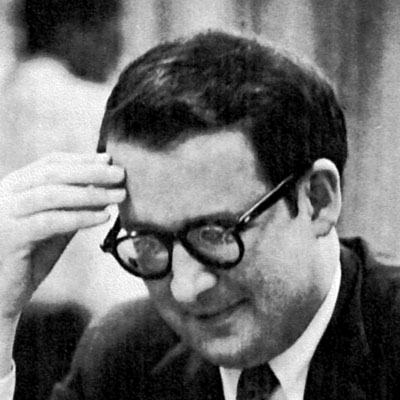
In October 1956 the Rosenwald Memorial brought twelve of America's best players to the Marshall Chess Club in Greenwich Village. Donald Byrne, twenty-six, a former U.S. Open champion, was paired in round eight against the youngest competitor: Bobby Fischer, a thirteen-year-old from Brooklyn in his first serious invitational.

Fischer played the Grünfeld, and for ten moves the game looked like a lesson: the master pressing, the boy conceding the center. Then Byrne moved the same piece twice at the wrong moment, and Fischer's 11...Na4 turned the board inside out. Two moves later a knight took a pawn Byrne thought was poisoned; four moves after that came the move the game is named for. 17...Be6 — Black's queen left standing where the bishop on g5 could simply take her.

Byrne took. What followed was a windmill: 18...Bxc4+ and then check after check from knight and bishop, each one peeling another piece off White's position while the white king shuttled between g1 and f1. When the dust settled Fischer had rook, two bishops and a pawn for the queen — a won game by arithmetic, played out with an adult's technique. Byrne, perhaps in tribute, perhaps in disbelief, played on until the boy mated him on move forty-one with every black piece taking part.

Hans Kmoch annotated the game in Chess Review under a title that has never needed revising. Fourteen months later Fischer was U.S. Champion at fourteen. Sixteen years later he was champion of the world — and the game he played at thirteen was still the one every American child was shown first.

The queen stands to be taken for eleven moves. Taking her is the losing move — and there is no other.

Kmoch's Chess Review headline named it within the month — hyperbole in 1956, consensus ever since.

The turns of the screw

The moments

Click one — the board above jumps there.

Get this breakdown for your game →
The cast

The players

Donald Byrne

Donald Byrne

1930 — 1976 · NEW YORK

U.S. Open champion at twenty-three, Olympiad player, college professor — one of the finest American masters of his generation, and a gracious one. He played the boy like an equal, got a masterpiece played against him, and reportedly took pride in his part in it.

Bobby Fischer

Bobby Fischer

1943 — 2008 · BROOKLYN

Thirteen years old, national junior champion, one year from the U.S. title and sixteen from Reykjavík. This is the game where the story of the greatest American player begins — with a queen left en prise and the coldest nerves in the room.

Machine-checked

The score

The moves are history's; we checked them against it.

1. Nf3 Nf6 2. c4 g6 3. Nc3 Bg7 4. d4 O-O 5. Bf4 d5 6. Qb3 dxc4 7. Qxc4 c6 8. e4 Nbd7 9. Rd1 Nb6 10. Qc5 Bg4 11. Bg5 Na4 12. Qa3 Nxc3 13. bxc3 Nxe4 14. Bxe7 Qb6 15. Bc4 Nxc3 16. Bc5 Rfe8+ 17. Kf1 Be6 18. Bxb6 Bxc4+ 19. Kg1 Ne2+ 20. Kf1 Nxd4+ 21. Kg1 Ne2+ 22. Kf1 Nc3+ 23. Kg1 axb6 24. Qb4 Ra4 25. Qxb6 Nxd1 26. h3 Rxa2 27. Kh2 Nxf2 28. Re1 Rxe1 29. Qd8+ Bf8 30. Nxe1 Bd5 31. Nf3 Ne4 32. Qb8 b5 33. h4 h5 34. Ne5 Kg7 35. Kg1 Bc5+ 36. Kf1 Ng3+ 37. Ke1 Bb4+ 38. Kd1 Bb3+ 39. Kc1 Ne2+ 40. Kb1 Nc3+ 41. Kc1 Rc2# 0-1 0-1

ECO A15 · our PGN header reads Date 1956.10.17.

↓ DOWNLOAD PGN
Your game could look like this.Make mine

Provenance

Played in round eight of the Rosenwald Memorial at the Marshall Chess Club, 17 October 1956, and published worldwide within weeks. The score replays legally by machine to the mating position. Verified 2026-08-04.
  • Chess Review, November 1956 — Hans Kmoch's annotations — the article that coined the name
  • Wikipedia, "The Game of the Century (chess)" — the standard score and tournament context
  • Machine replay — the score replays legally to the mating position, 82 plies
After the game

Where this goes next

Your game could be next.

Paste a PGN, pick a world, and read your own game the way you just read this one — drawn, narrated, printable.

Make this from my game
In other worlds
The Great War of Kurukshetra editionrap_empire editionrap_empire editionrick_and_morty edition

The same game told in 7 worlds — switch editions right in the reader above.

Browse the editions
Keep going

More famous games

The catalogue of games that made chess history — each one a playable story.

Browse the collection →

Questions

What is the Game of the Century?
A tournament game played in New York on 17 October 1956 between Donald Byrne, one of America's leading masters, and Bobby Fischer, then thirteen years old. Fischer sacrificed his queen on move seventeen, took payment in pieces through a windmill of discovered checks, and mated with rook, bishops and knight. Hans Kmoch named it in Chess Review within the month.
How old was Fischer, really?
Thirteen years and seven months. He was not yet U.S. Champion — that came fourteen months later, at fourteen, the youngest ever at the time. The game was the moment American chess understood what it had.
Was the queen sacrifice sound?
Yes — and that is what separates it from most famous sacrifices. Engines confirm that 17...Be6, leaving the queen to be taken, wins by force: the discovered-check windmill regains a rook, two bishops and a pawn. Byrne's extra queen spends the rest of the game watching from b6 and b8.
Why did Byrne play on to checkmate?
Partly courtesy, partly disbelief, and partly — as annotators have suggested — so the audience could see the finish. A master would normally resign long before move 41; letting a boy demonstrate mate on the board made the game a complete work.